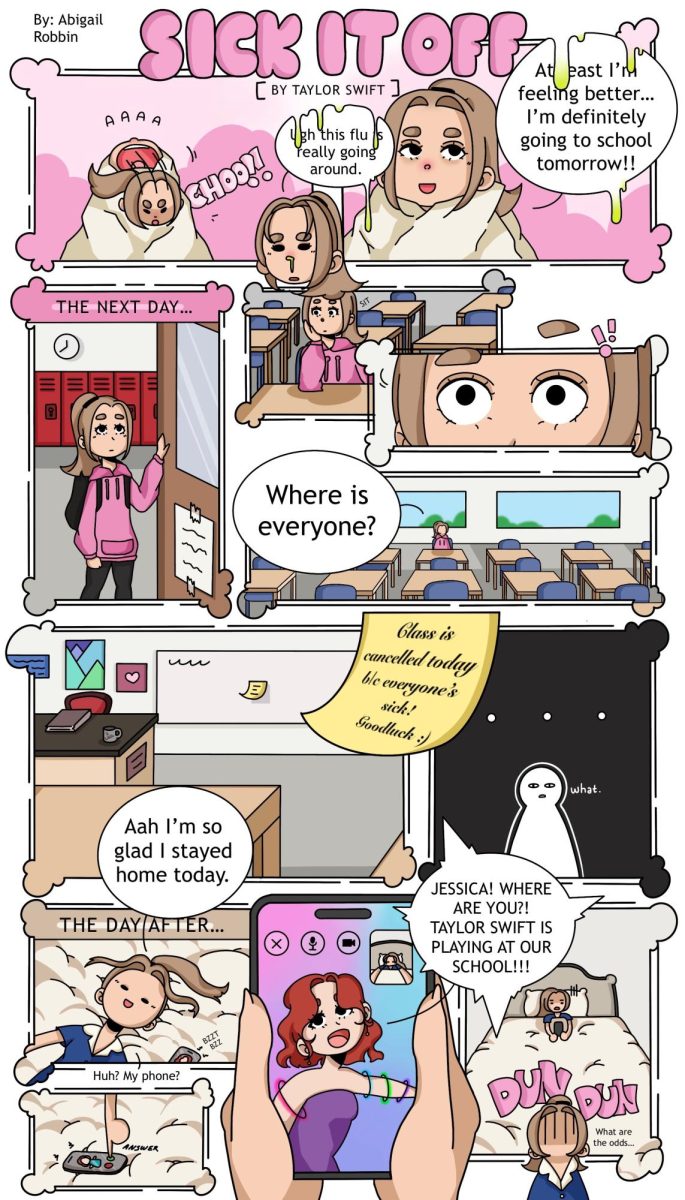

Now that the second semester is in full swing, it feels like we’ve finally caught our breath after our first-semester finals. Those weeks of rest make finals week easy to remember—the late nights, the stress, and the feeling that everything we’d learned came down to one crammed test. Finals are supposed to measure our learning and long-term memorization, but after experiencing my first week of high school finals, I’m not so sure one test can really do that on its own.
I understand why finals exist. Studying for them forced me to look back at everything we covered over four months, instead of just focusing on the most recent unit. Finals also made me plan ahead and manage my time in ways I hadn’t needed to before. In that sense, finals felt like a preview of future academic challenges. I do think they serve a purpose, and unlike many, I don’t believe schools should get rid of them.
Pressure is something we can’t avoid, no matter what we choose to do in life—whether it’s college exams, job interviews, or deadlines. Finals force us to face that pressure in a controlled environment. As uncomfortable as it is, learning to stay focused, manage stress, and push through nerves is a skill we’ll need long after high school.
Finals also prepare us for the kinds of exams we’ll eventually have to take. University tests are often timed, cumulative, and high-stakes, just like finals. My first-semester finals gave me a realistic preview of what that experience is like and showed me where I need to improve, not just academically, but mentally.
While finals don’t measure everything, they do teach lessons other assignments can’t. Projects and homework show short-term understanding, while finals test endurance, focus, and the ability to apply knowledge under pressure. In that way, finals aren’t just about grades—they’re practice for handling challenges we can’t avoid in the future.
Despite the challenges they bring, I strongly believe finals play a necessary role in academics. For everyone, but especially freshmen, they encourage responsibility and remind us that learning doesn’t stop when a unit ends.